Built to Last Improvements Built to Last
Improvements
Insured Contractor

Retaining Wall Installation

Concrete block, natural stone, and interlocking retaining walls for hillside properties — engineered for the slope, built by Ryan.
Engineered for Slopes
Drainage Built In
Permits Handled
50+ Year Lifespan

Holding ground on Altadena’s hillsides

Altadena sits at the base of the San Gabriel Mountains, and that means slopes. Slopes that shift, erode when it rains, and turn usable backyard space into a dirt hillside creeping toward your foundation.

A retaining wall holds the earth in place, creates usable flat space, manages drainage, and protects your property from erosion. But a retaining wall is only as good as what’s behind it and beneath it — and that’s where most contractors cut corners.

Ryan builds retaining walls the right way: proper excavation, compacted base material, engineered drainage, every course level, every joint solid. He’s on your property every day doing the work himself.

Retaining wall types we build

Concrete block (CMU)

The workhorse of residential retaining walls. Strong, durable, and cost-effective for walls of any height. Ryan builds CMU walls with rebar reinforcement, concrete-filled cores, and proper footings. They can be finished with stucco, stone veneer, or left with a clean block face.

Natural stone

For homeowners who want their retaining wall to look like it belongs in the landscape. Ryan builds with locally sourced stone, dry-stacked or mortared depending on height and structural requirements. Natural stone walls age beautifully and complement the native hillside aesthetic of the San Gabriel Valley.

Interlocking block

Segmental retaining wall systems — like Allan Block or Keystone — use engineered interlocking units that stack without mortar. A strong mid-range option that installs efficiently and handles curves well. Good for walls up to 4-6 feet without engineering.

Timber and railroad tie walls

Ryan builds timber retaining walls for shorter applications (under 3 feet) where a rustic look is appropriate. For structural walls, he steers clients toward block or stone for longevity.

What makes a retaining wall last

Every retaining wall fails for one of three reasons: bad drainage, bad footings, or bad backfill. Ryan eliminates all three.

Drainage first

Water pressure behind a retaining wall is the number one cause of failure. Ryan installs gravel backfill and a perforated drain pipe behind every wall, directing water to daylight or a storm drain. No exceptions — even on short walls. Skipping drainage is a $500 savings that creates a $10,000 problem.

Proper footings

Ryan excavates to undisturbed soil, compacts a gravel base, and pours a concrete footing sized for the wall height and soil conditions. For walls over 4 feet, he works with structural engineers to spec the footing dimensions and rebar layout.

Compacted backfill

Ryan backfills with clean gravel — not dirt, not construction debris — compacted in lifts to prevent settling. This creates a stable mass behind the wall and keeps the drainage system functioning.

Common retaining wall projects in Altadena

Creating flat yard space

The most common request. A hillside lot with a steep slope gets a retaining wall that carves out a flat area for a patio, play space, or garden. Ryan designs the wall height and placement to maximize usable space while keeping within permit-friendly dimensions when possible.

Erosion control

After fire or heavy rain, previously stable slopes can start moving. Ryan builds retaining walls to stop erosion, redirect water flow, and protect foundations. For fire-damaged properties, this is often the first thing that needs to happen.

Terraced hillsides

For steep slopes, a single tall wall isn’t always the answer. Ryan builds terraced systems — two or three shorter walls stepping up the hillside — that spread the load, create planting beds between tiers, and look better than one monolithic structure.

Driveway and foundation walls

Some properties need retaining walls along driveways, at property boundaries, or near foundations where grade changes create structural risk. Ryan builds these to engineering standards with proper waterproofing.

Permits and engineering

LA County requires a building permit for retaining walls over 4 feet tall. Walls holding a surcharge — like a driveway, structure, or slope above — may need engineering even at shorter heights.

Ryan handles the entire permit process. When engineering is required, he works with licensed structural engineers to produce plans that meet county requirements.

Built for the long haul

A well-built retaining wall lasts 50 years or more. Ryan builds to that standard because his name is on every project. Commercial-grade materials, structural engineering specs followed to the letter, and no shortcuts on the parts you’ll never see — the footing, the drainage, the backfill.

Five years from now, you want a wall that’s holding — not one that’s leaning, cracking, and letting water through.

Ready to discuss your project?

Free estimates. No pressure. Just honest advice from Ryan.

Contact Ryan Today

Recent Retaining Wall Installation projects

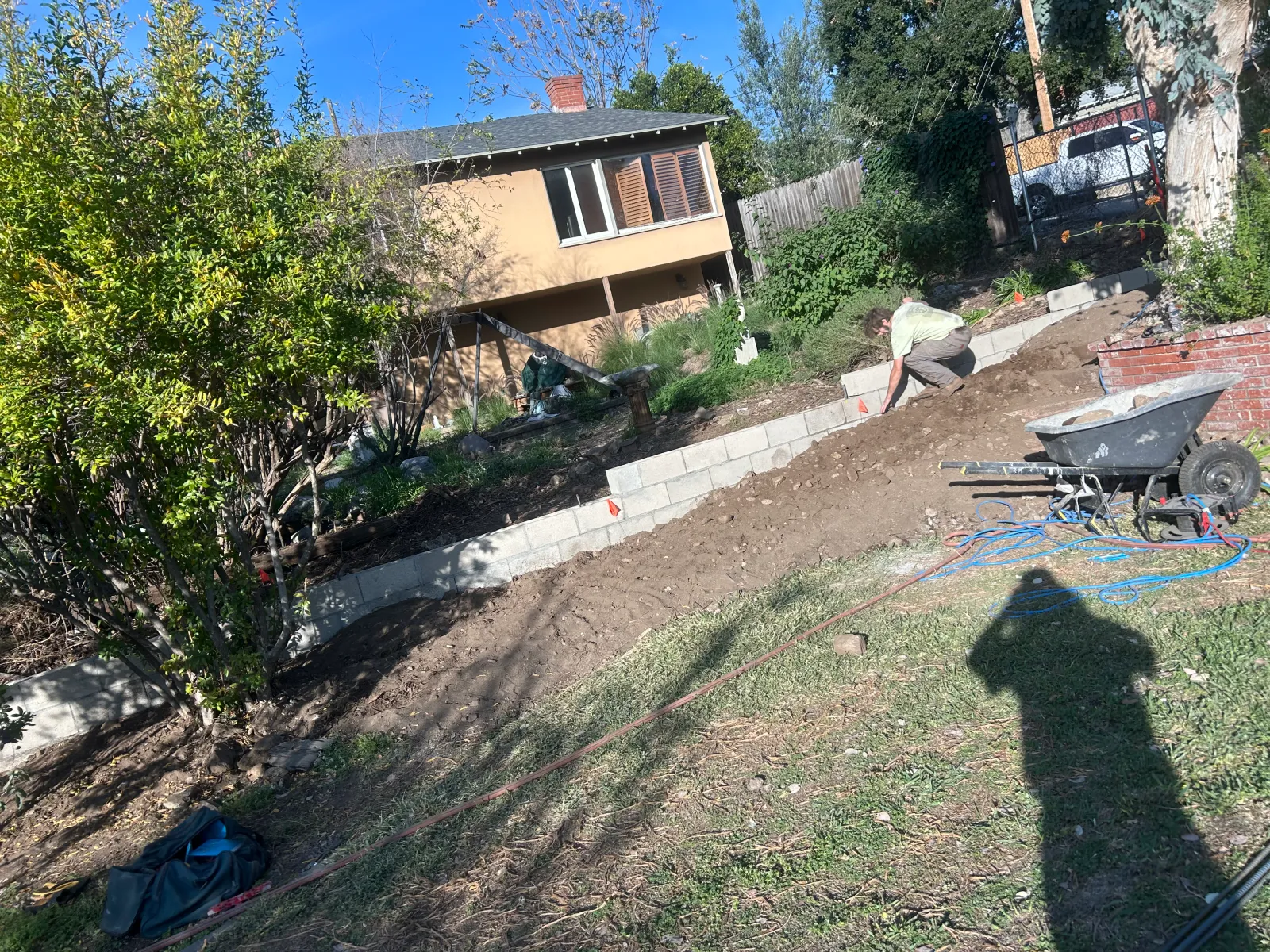
Cinder block footing being set for retaining wall
Ryan setting cinder blocks in hillside trench
Paver cap stones being laid on retaining wall
Waterproofing and bracket installation on retaining wall

How it works

1

Call Ryan to describe your slope or erosion concern

2

On-site evaluation with measurements

3

Detailed estimate with material options

4

Build — Ryan on-site daily until complete

Pricing guidance

Retaining walls in Altadena typically cost $40–$80 per square face foot for concrete block and $50–$100+ for natural stone. A standard 40-foot wall at 4 feet tall ranges from $6,400 to $16,000+ depending on material, access, and engineering requirements.

Every property is different. Call Ryan to discuss your specific project.

Common questions

How much does a retaining wall cost in Altadena?
Concrete block retaining walls typically cost $40–$80 per square face foot. Natural stone runs $50–$100+. A 40-foot wall at 4 feet tall ranges from $6,400 to $16,000+ depending on material, site access, and whether engineering is required.
Do I need a permit for a retaining wall in Altadena?
In LA County, retaining walls over 4 feet tall (measured from the bottom of the footing to the top of the wall) require a building permit and often engineered plans. Ryan handles the permit process and works with engineers when needed.
What type of retaining wall is best for hillside properties?
It depends on the slope, soil conditions, and height needed. Concrete block (CMU) is the most common choice for structural walls. Natural stone works well for shorter walls and adds visual appeal. Interlocking block is a good mid-range option. Ryan evaluates your specific site and recommends what will work long-term.
How long does retaining wall installation take?
A standard residential retaining wall takes 1–3 weeks depending on length, height, and site conditions. Walls that require excavation on steep slopes or engineered footings take longer. Ryan provides a timeline with your estimate.
Can a retaining wall help with drainage problems?
Yes. A properly designed retaining wall includes drainage behind the wall — typically a gravel backfill and perforated drain pipe that directs water away from the structure. Poor drainage is the number one reason retaining walls fail, and Ryan builds drainage into every wall.

You might also need

Complete Backyard Renovations

Combine retaining walls with a full backyard transformation.

Learn More
Fire Damage Restoration

Exterior rebuilds and yard restoration for fire-damaged properties.

Learn More
Landscape Installation

Finish your hillside project with professional landscaping.

Learn More

Ready to talk about your backyard?

Whether it's a fence, a full renovation, or fire damage restoration — it starts with a conversation.

Call Ryan — (516) 655-7681