
Drought-Tolerant Landscaping for Altadena Homes: A Practical Guide | Built to Last Improvements
If you’re still watering a lawn in Altadena, you already know the deal. The water bill climbs every summer. The grass turns brown the second you miss a week. And the outdoor watering restrictions make it harder every year to justify keeping turf alive in a climate that actively doesn’t want it.
I rip out lawns and install drought-tolerant landscapes across Altadena and the San Gabriel Valley. You’re not giving up on a nice yard. You’re just planting things that actually want to grow here instead of fighting the climate every summer. The right plants in the right design will look better in August than any lawn you’ve ever maintained. And they’ll use maybe a quarter of the water.
Why does drought-tolerant landscaping make sense in Altadena?
I’m not going to lecture you about water conservation. You already know. But here’s what actually pushes most of my clients from “thinking about it” to “let’s do this.”
Water restrictions aren’t going away. Southern California’s supply problems are structural, and the restrictions on outdoor watering will probably get tighter, not looser. A landscape that needs regular deep soaking is a liability you’ll be managing for as long as you own the house.
Altadena’s climate is Mediterranean. Most rain falls between November and March, then it’s dry for six to eight months. Plants from similar climates evolved for exactly this cycle. They go dormant or slow down in summer and flush with growth when the rains come. A lawn needs water twelve months a year. California natives need water for maybe one to two growing seasons until their roots establish, and then most of them are fine on rainfall alone.
Fire zones add to the case. Much of Altadena sits in Very High Fire Hazard Severity Zones. Defensible space guidelines require managing vegetation within 100 feet of structures. Low-fuel, well-spaced native plants meet those guidelines without extra effort. A dry lawn in September is fuel. A properly designed drought-tolerant landscape is part of your fire safety, not just your water bill.
And honestly, the maintenance drops off a cliff. No mowing, no fertilizer schedule. You’ll still do some pruning and weed management, but the weekly grind of lawn care goes away.
What drought-tolerant plants grow well in Altadena?
I’ve tried a lot of plants in Altadena. The nursery label says “drought-tolerant” on half the stock, but that doesn’t mean it handles our combination of full summer sun, foothills heat, and the occasional frost that dips into the low 30s on a January morning.
Here’s what I know works.
California natives
These are the foundation. They evolved in this specific climate and soil, they support local pollinators, and they look right.
Manzanita has that distinctive reddish bark, stays evergreen, and blooms white or pink in late winter. Varieties range from ground-hugging spreaders to 8-foot shrubs. The roots hold soil on slopes like nothing else.
Ceanothus (California lilac) puts on a show in spring with blue-to-purple flower clusters. Fast-growing, available as ground cover or upright shrubs. Honestly one of the most visually striking natives you can plant. I use it on almost every project.
Cleveland sage, white sage, and the hybrid salvias are drought-proof once they’re in the ground. The fragrance alone is worth it, and hummingbirds go absolutely nuts for them.
California fuchsia blooms bright orange-red from late summer through fall, exactly when everything else is fading. Low-growing, spreads on its own. It’s the plant that makes people stop and ask “what is that?” in October.
Toyon is an evergreen shrub (or small tree, depending on how you let it go) with bright red berries in winter. Works as a screen, a background plant, or on its own.
Mediterranean plants
Same climate pattern as ours. They mix seamlessly with the natives.
Lavender handles the heat if you give it decent drainage. Spanish and French varieties do best here. Plant it somewhere you walk past so you get the fragrance.
Rosemary is practically indestructible once it’s established. Trailing varieties work as ground cover on slopes. Upright varieties make informal hedges. I’ve seen rosemary survive complete neglect for years and still look fine.
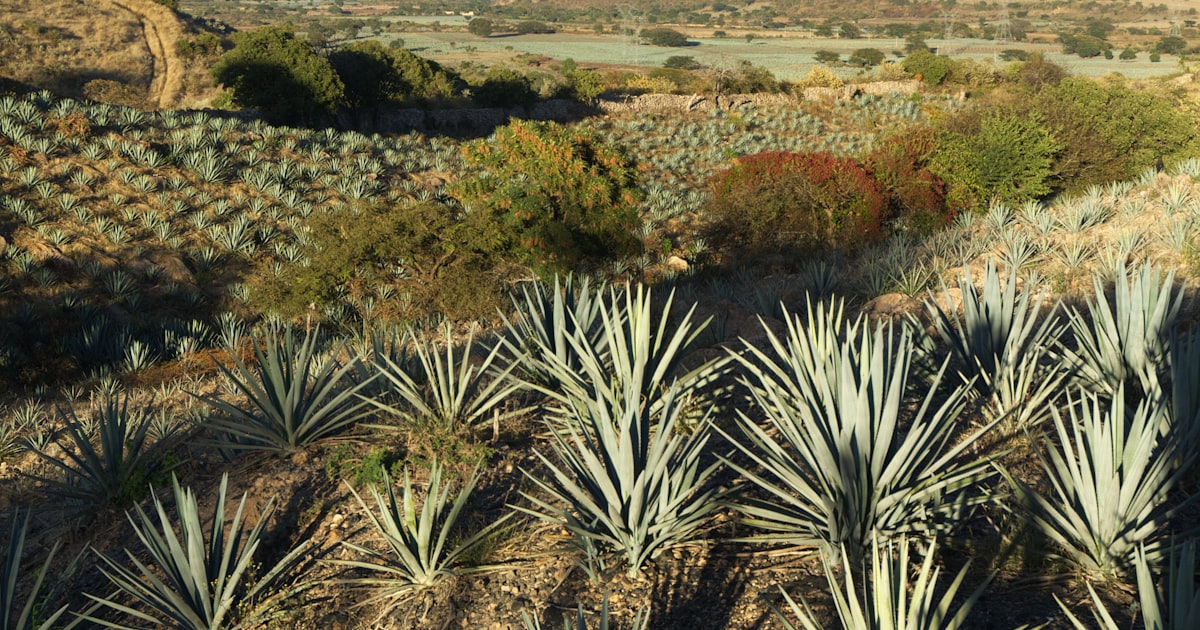
Agave makes a statement. Century plant, blue agave, attenuata — they store water in their leaves and barely need irrigation after the first year. One well-placed agave can anchor an entire front yard design.
Grevillea is Australian but does great here. Unusual flowers, evergreen foliage, and it genuinely doesn’t care about dry summers.
Ground covers that replace lawn
These give you the living-landscape feel without the water bill.
Dymondia lays flat in a tight silver-green carpet and handles light foot traffic. It’s the closest thing to a lawn that doesn’t need mowing or regular irrigation. I install it a lot in front yards where homeowners still want that green look.
Creeping thyme stays very low, smells great when you step on it, and works beautifully between pavers or along pathways.
Myoporum spreads fast and dense. Good on slopes where you need erosion control and don’t want bare soil.
If you’re ready to ditch the lawn, give me a call at (516) 655-7681.
How do you design drought-tolerant landscaping that looks intentional?
The biggest mistake I see in drought-tolerant yards is the “gravel pit with a cactus” approach. Ripping out the lawn and dumping rock doesn’t make a landscape — it makes a vacant lot. You need structure and intention.
Layer the planting. Think in three tiers, the way natural plant communities organize themselves. Canopy layer: small trees or large shrubs for shade and structure. Shrub layer: ceanothus, salvia, lavender, rosemary, where most of the visual interest and seasonal color lives. Ground layer: dymondia, thyme, sedums, small grasses to suppress weeds and hold moisture.
Use hardscape as design, not filler. Rock, decomposed granite, boulders, and pavers create contrast and define spaces. A DG pathway or a well-placed boulder grouping does more for the design than another row of shrubs. The hardscape and patios page shows how these elements work in a full yard. Aim for roughly 40 to 60 percent planted area and the rest in hardscape and mulch.
Group plants by water needs. This is called hydrozoning and it’s the difference between a landscape that works and one that wastes water. Plants that need occasional summer irrigation go in one zone. Plants that survive on rainfall alone once established go in another. When they’re mixed together, one of them is always getting the wrong amount.
What kind of irrigation do drought-tolerant landscapes need?
Drought-tolerant doesn’t mean zero irrigation. Most plants need supplemental water for one to two growing seasons while roots get established. After that, many natives are fine on their own, but Mediterranean plants benefit from an occasional deep soak in the hottest months.
Drip systems deliver water straight to the root zone through emitters or inline drip tubing. Almost no evaporation loss, no water on the hardscape, and you get precise control over each zone. For drought-tolerant landscapes, drip is what I install. More detail on the irrigation systems page.
A weather-based smart controller adjusts the schedule automatically. Skips watering after rain, adds time during heat waves. They pay for themselves in water savings within a year or two, and most qualify for utility rebates.
The water savings are significant. A drip system on a drought-tolerant landscape typically uses 50 to 75 percent less water than sprinklers on a lawn. For a lot of Altadena homeowners, that’s $50 to $150 per month in summer savings.
How much does drought-tolerant landscaping cost?
Basic installation runs $3 to $8 per square foot. That covers lawn removal, soil amendment, drought-tolerant plants in 1- to 5-gallon sizes, drip irrigation, and mulch. A 1,000 square foot front yard comes out to $3,000 to $8,000.
Premium installation runs $8 to $15 per square foot. Larger specimen plants, boulder features, DG pathways, landscape lighting, detailed planting design, and a smart irrigation controller. Same 1,000 square foot yard, $8,000 to $15,000.
Both include labor, materials, and irrigation. If you need significant grading or retaining walls, that’s additional scope.
How does the turf replacement rebate work?
The Metropolitan Water District’s SoCal Water Smart program offers $2 to $3 per square foot for qualifying turf replacement. On a 1,000 square foot lawn, that’s $2,000 to $3,000 back in your pocket.
You need to apply and get approved before starting work. This is the part people miss. Doing the project first and applying for the rebate after disqualifies you. You also need an actively irrigated lawn before the project, qualifying replacement plants and permeable surfaces, and a weather-based irrigation controller.
I’ve walked homeowners through this process multiple times and can tell you what qualifies and what doesn’t.
When is the best time to start?
Fall through early spring is the best time to install in Altadena. Cooler temperatures and natural rainfall help new plants establish with minimal supplemental water. Planting in July means fighting the heat with extra irrigation for months.
My process: I walk the property and look at sun exposure, soil, drainage, and what’s already there. We talk about how you use the yard, whether that’s the front entrance, entertaining, kids, dogs, whatever. Then I put together a planting plan with specific varieties, spacing, and layout so you can see what’s going where before any digging starts.
A typical front yard project takes three to five days. A full-property installation might take one to two weeks.
Bottom line
Drought-tolerant landscaping costs $3 to $15 per square foot installed, uses 50 to 75 percent less water than a lawn, and the turf replacement rebate can put $2,000 to $3,000 back in your pocket. California natives and Mediterranean plants are the backbone. Install drip irrigation, group plants by water needs, and plant in fall or early spring for best results.
Your yard doesn’t have to be a choice between a thirsty lawn and a pile of gravel. The right plants, designed well and installed properly, will look better than any lawn you’ve had and they’ll actually belong in this climate. Call me at (516) 655-7681 if you want to talk about your property.
Ready to start your project?
Have questions about what you just read? Ryan can walk you through it.
Contact Ryan Today